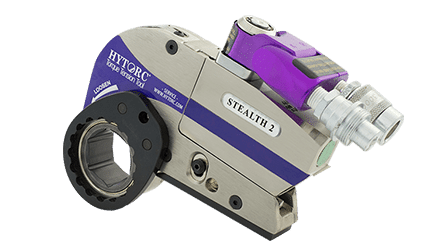
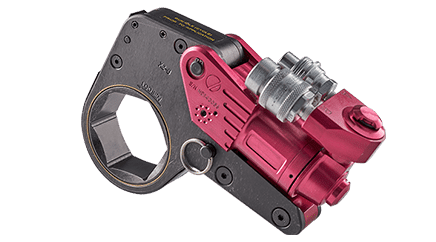
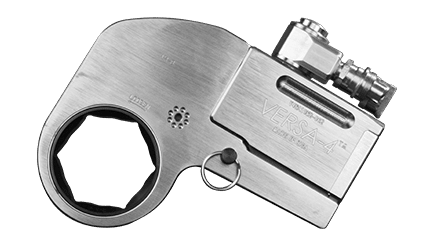
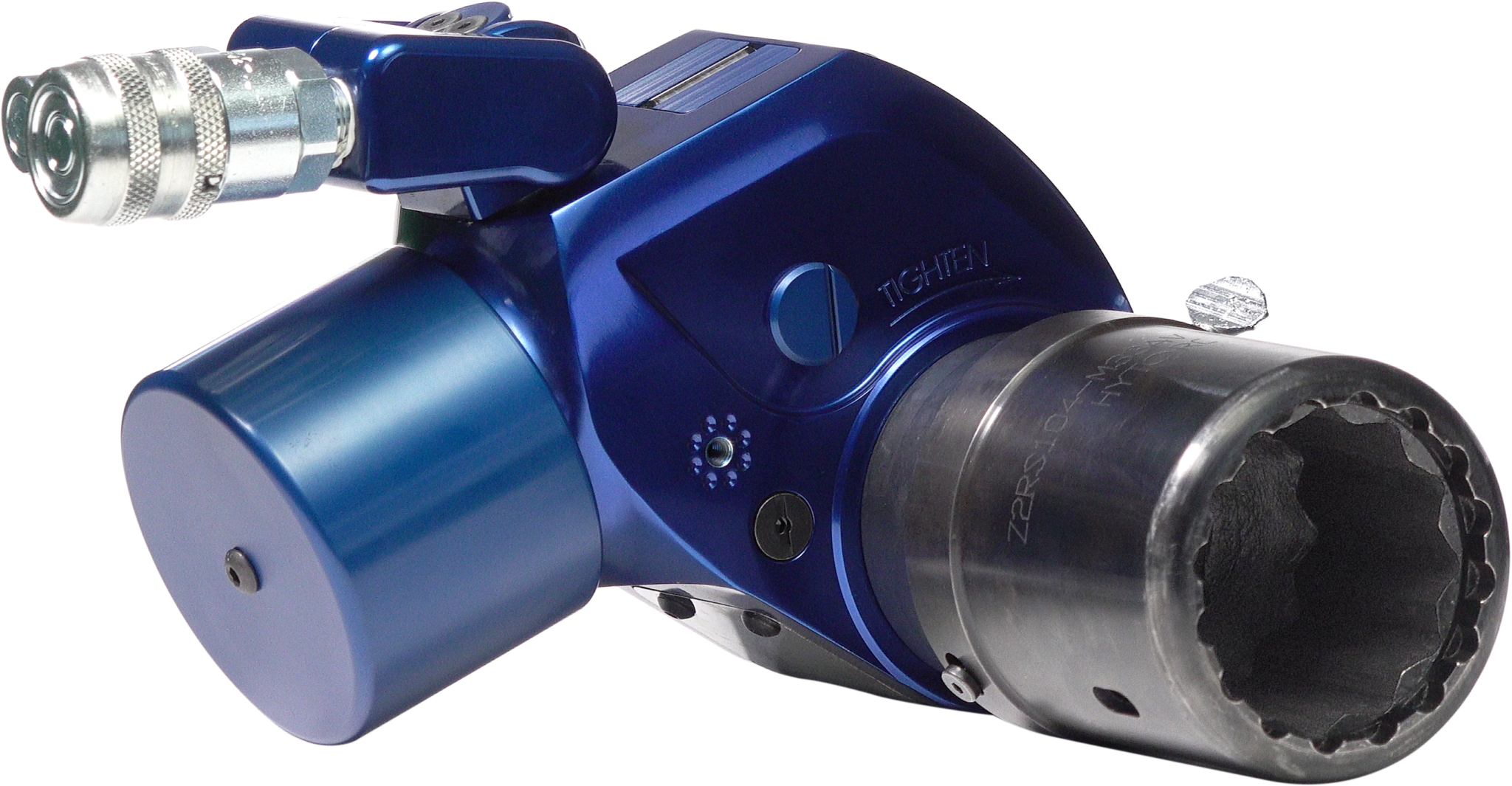
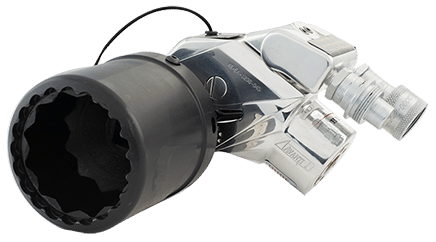
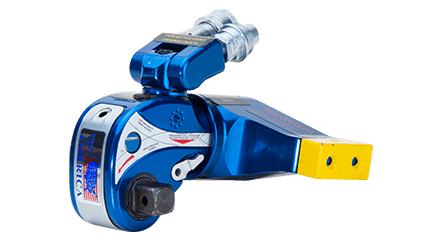
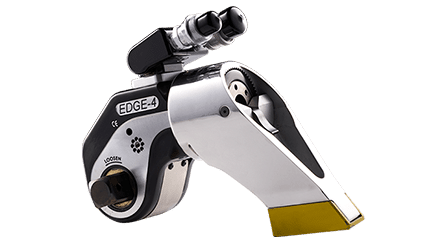
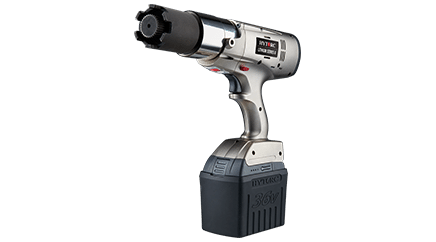
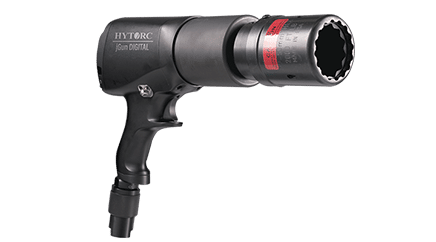
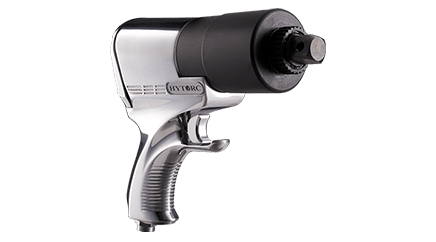
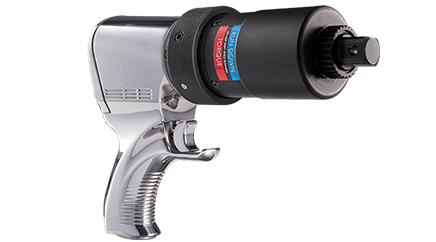
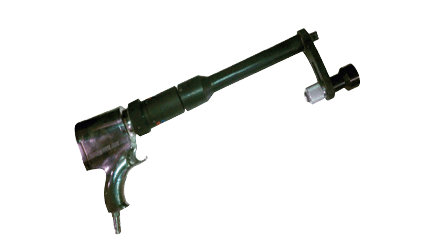
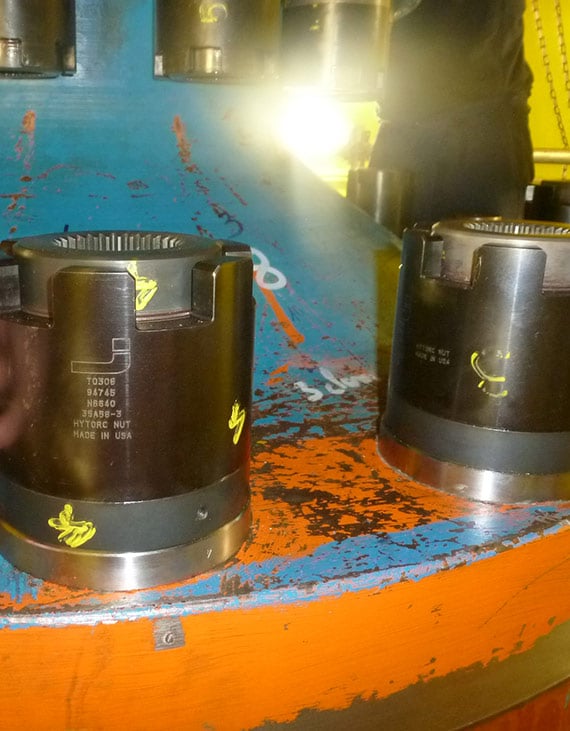
A HYTORC NUT tensioning nut is a mechanical tensioner which allows to tighten a bolt in pure tension with a torque tool. This nut is made in 3 pieces to protect the bolted assembly from friction and wear.
A ring at the base ensures contact without movement on the bearing surface, a threaded insert accompanies the longitudinal stroke of the threaded rod without rotation and the force is transmitted by an external sleeve which only rubs on the other 2 parts.
There are 3 types ofHYTORC NUT tensioning nuts according to the needs: type TN when the threaded rod does not protrude from the nut, type CN when the threaded rod protrudes from the nut or type SN when the nut has to be driven by a hydraulic wrench.
If you want to tighten a bolted connection in tension quickly and with great precision, the HYTORC NUT tensioning nut is your ideal ally.
It combines the advantages of tensioning, which does not wear out the bearing surfaces and provides a stress-free effort, with the advantages of torque tools, which are very quick and easy to put in place without mechanical relaxation when removed.
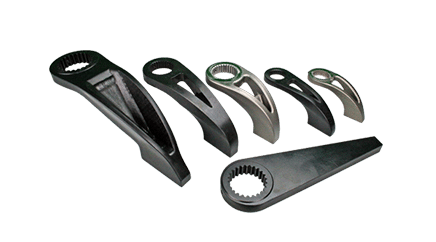
Hydraulic torque wrenches or torque screwdrivers are equipped with a driver that drives the outer sleeve and reacts on the threaded insert, preventing the threaded shank from turning and therefore from being subjected to any torsional stress.
With a hydraulic eye wrench equipped with a reaction plate on the side, the link cassette drives the sleeve and takes without reaction on the base ring to obtain the same tightening characteristics.
This mechanical tensioner is operated by a torque tool and the operation is therefore incomparably faster than a multi-screw tensioner or traditional hydraulic tensioning.
As with conventional torque tightening, the hydraulic wrench or torque screwdriver is placed on the bolt and applies its force directly and can move on to the next nut without tedious implementation.
Moreover, the tool is freed from its reaction arm with the use of the driver, so there is no longer the question of a fixed and solid support point to find for the tightening of each bolt, which saves time and helps the productivity of the operator with increased safety.
The applied tension force is not subject to relaxation at the end of the clamping process, so that theclamping tool can be adjusted directly to the required tension level without any surplus that could reduce the final clamping accuracy of the assembly.
The internal lubrication between the 3 parts of the nut is controlled by HYTORC and the nuts are delivered with a correspondence chart between the applied torque (or the pressure to be adjusted for a hydraulic wrench) and the resulting tension because there is no external friction during tightening.
The tensioning is progressive and homogeneous.
This HYTORC NUT tensioning nut is the most widely used because it replaces a conventional nut with a reduced space requirement.
Its outside diameter is approximately equal to the flat dimension of the hex nut it replaces. It is also slightly higher to encompass the threaded rod end.
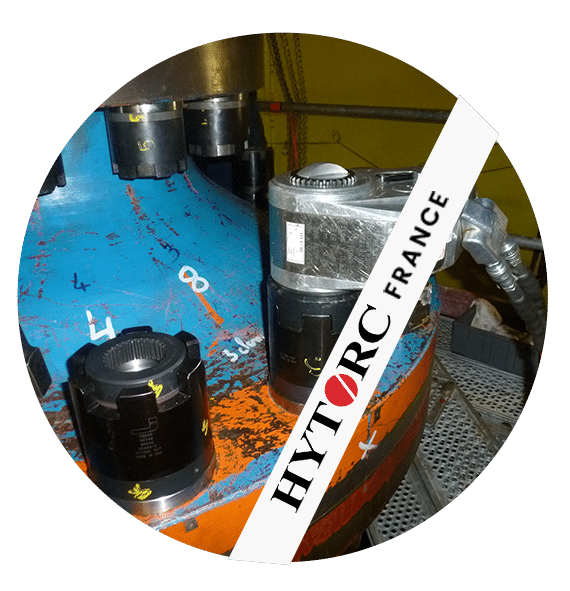
TheHYTORC NUT TN is often used on turbine housings because it is a good solution to the problems of seizure encountered on the devices.
It is tightened and loosened by hydraulic wrenches with square drive or pneumatic or electrically powered torque wrenches.
The HYTORC NUT type CN is intended to replace conventional nuts on applications where the threaded rod protrudes more than normal.
The height of the HYTORC NUT tensioning nut is greater than a conventional nut but the threaded rod can protrude beyond its upper face without preventing its use. In terms of outside diameter, it is equivalent to the dimension on flats of the conventional nut it replaces.
This nut is operated by square-drive tools.
The SN model of HYTORC NUT is designed to be tightened and loosened by hydraulic wrenches. Its height is lower than the other types of HYTORC NUT and the stem can protrude without worry.
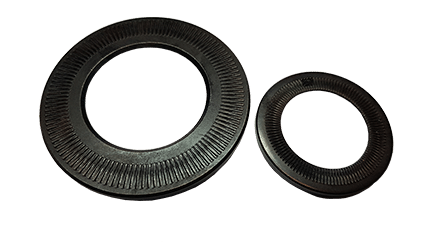
The wrench cavity and the outer sleeve are specially shaped for torque transmission and the support washer (base ring) is splined to hold the reaction plate which is mounted on the side of the tool’s link cassette.
This design is particularly interesting when there is little space at the end of the shank to pass the wrench or when the threaded shank protrudes significantly above the nut and it is not possible to tighten with the tool placed beyond the end of the shank.
The principle of the HYTORC Clamp NUT is often chosen for critical applications and when it is necessary to replace CHC screws, the solution can be a stud directly integrating the principle of the HYTORC NUT.
It is possible to make these Smart Stud HYTORC screws according to your needs to meet these extreme cases.