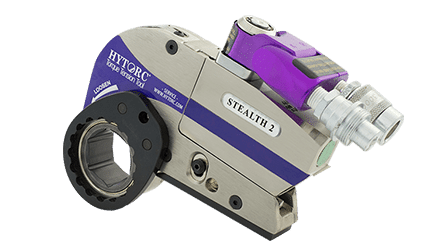
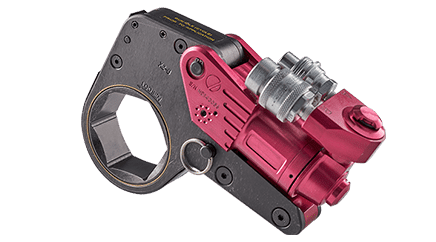
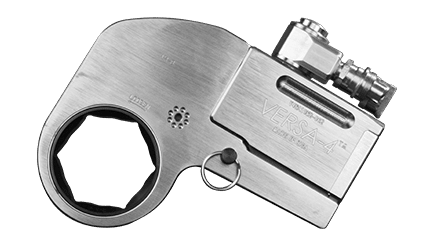
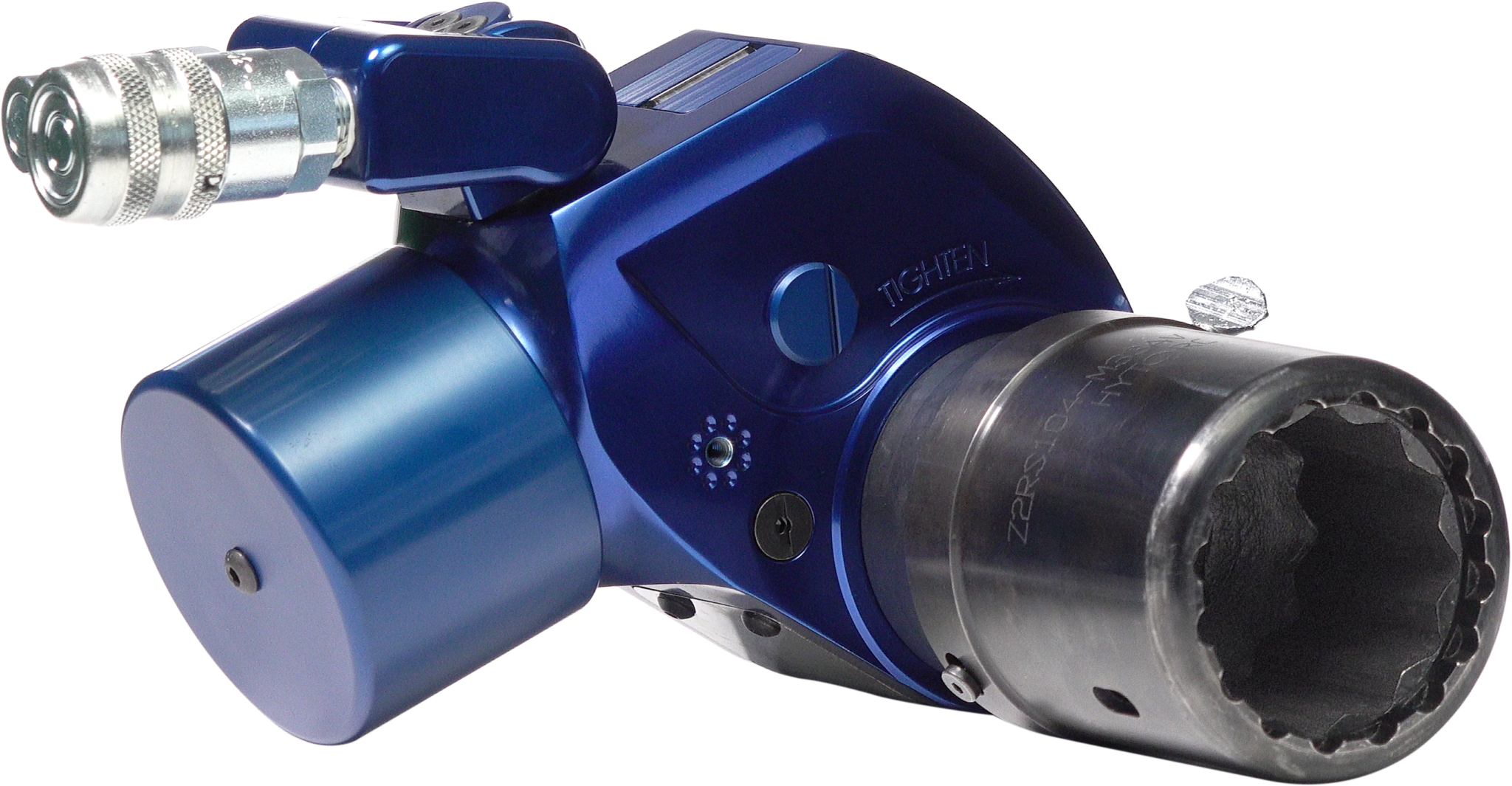
The HYTORC clamping method at the elastic limit is an optimal industrial clamping technique.
The preload forces applied to the bolts are often undersized so that they do not exceed the yield point when tightened by torque or tensioner.
The common denominator of the connections is that one wishes to remain in the elastic range of the bolt to control its behavior and guarantee the connection.
The problem that arises is that depending on the precision of the tool used and the tightening conditions, there is always a safety margin that is taken to avoid crossing the elastic limit.
Tightening with a system that detects the elastic limit to stop the tightening is safe because it allows you to make the most of your bolts without the risk of unexpected mechanical damage.
Ensuring that the bolts are tightened to the yield point allows the bolt and flange size to be exactly right for the force required to hold them in place.
This translates into a significant saving in space, weight and money on the design of assemblies.
Bolts are selected for the amount of pressure they can exert on an assembly to ensure that it is held securely over the life of the machine.
A large diameter bolt will exert more force on a bolted joint than a smaller diameter bolt.
In the same way, some materials allow to apply a higher tension without changing the diameter. With conventional tightening methods, the safety margin retained leads to oversizing all bolts to use them only at 80 or 90% of their capacity without any further mechanical justification.
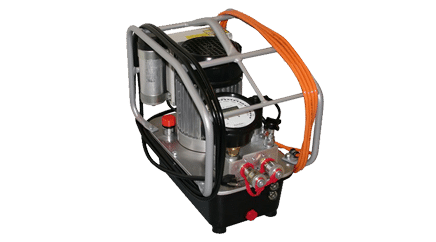
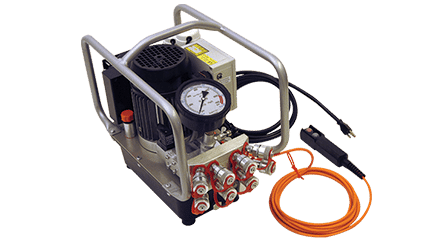
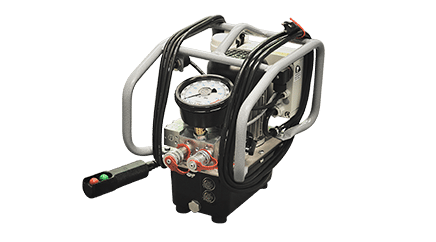
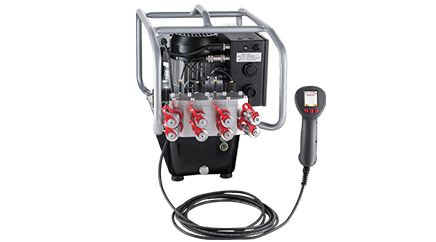
The hydraulic pump recording the data allows to see the final torque reached and by comparing the values obtained from one bolt to another it is possible to detect problems of material quality (steel, stainless steel,…), of lubrication or other defects…
The idea is to stop the tightening of the bolt when there is an inflection of the ratio between the evolution of the torque and the evolution of the rotation angle of the tool.
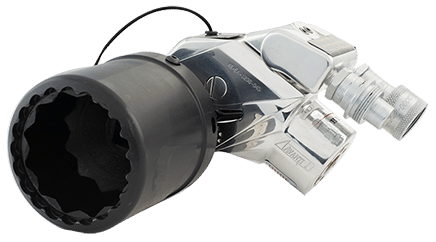
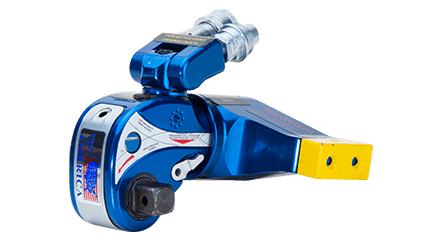
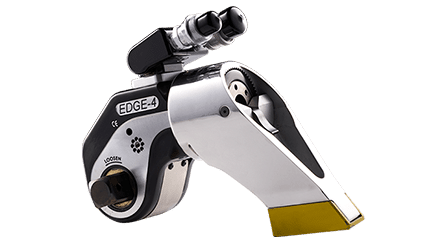
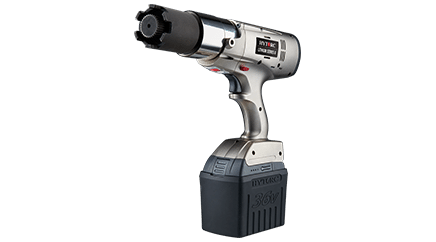
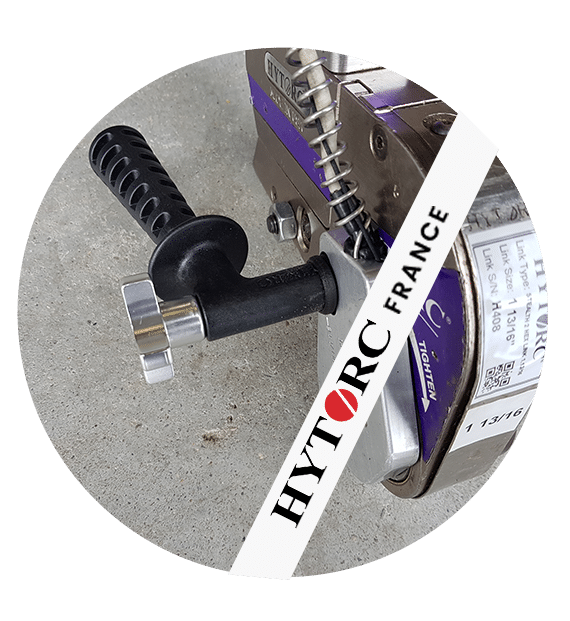
Therefore, the hydraulic wrench must be equipped with an angle sensor that will give this additional information to the pump.
The hydraulic pump controls the tightening by measuring in real time and simultaneously the pressure information sent to the hydraulic wrench (synonymous with the torque value applied to the bolt) and the resulting angle of rotation.
The ratio is constant in the elastic range because the angle reflects the elongation of the screw or threaded rod which is proportional to the tension force.
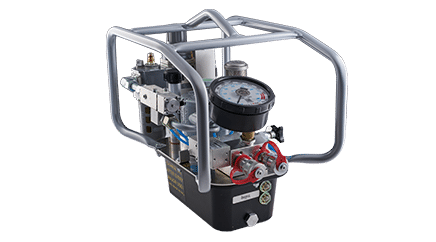
As soon as the pump’s electronics detect a change in the ratio meaning that less torque is needed for the same angle, it stops and the tightening is completed on the elastic limit.