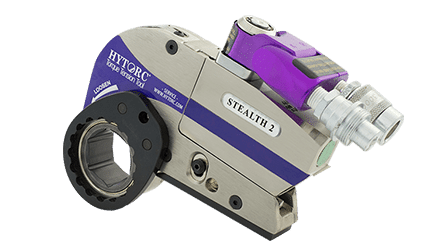
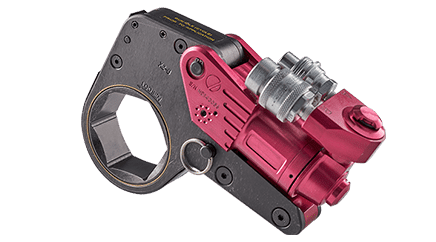
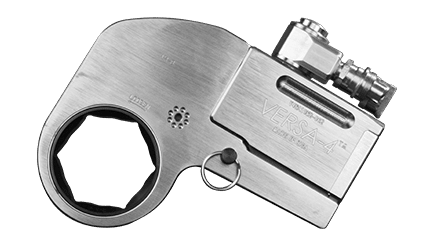
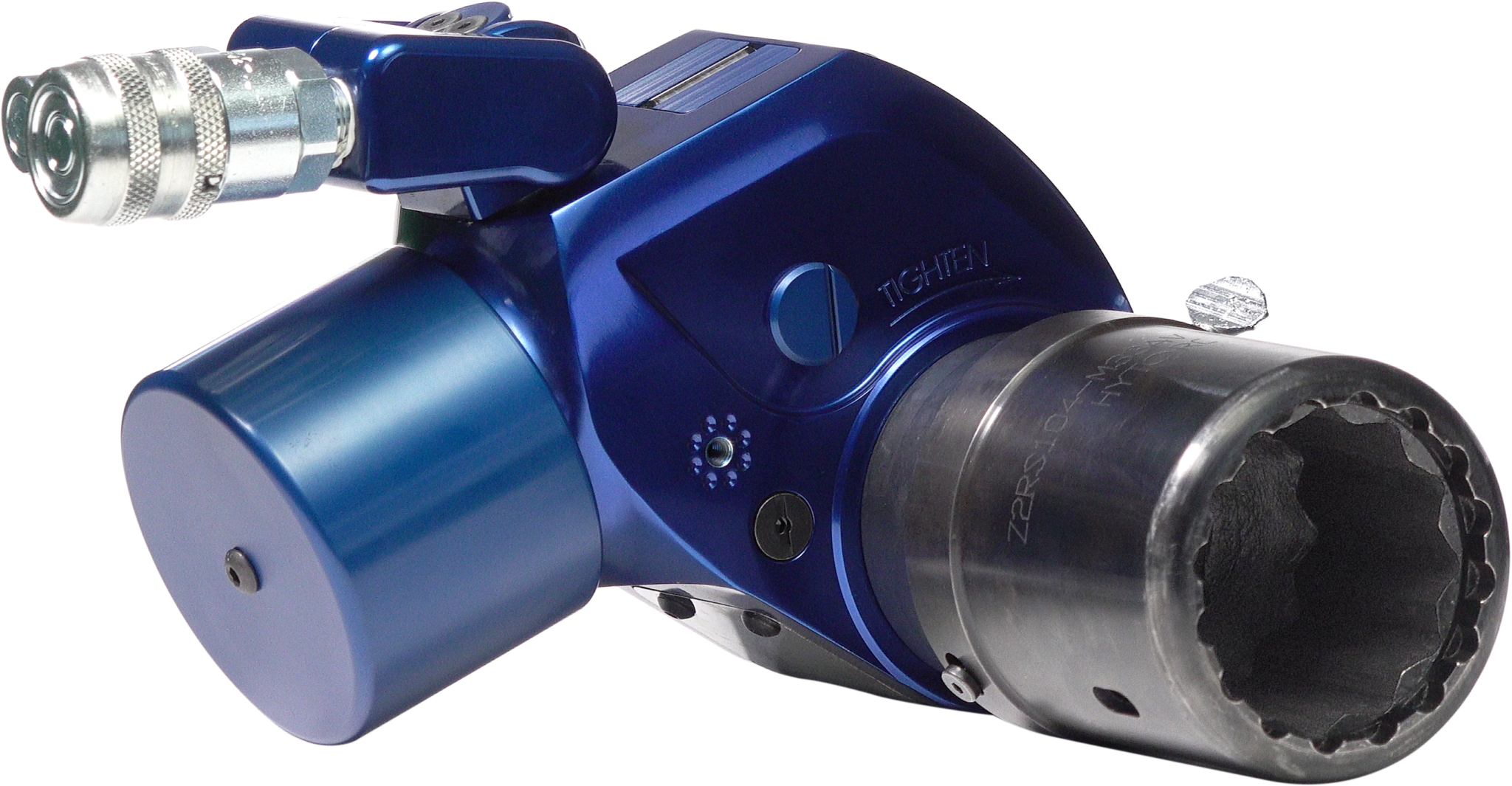
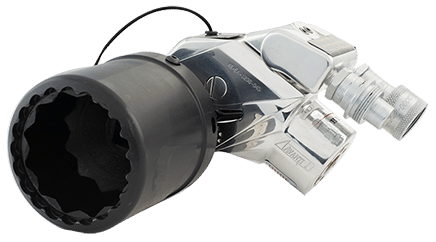
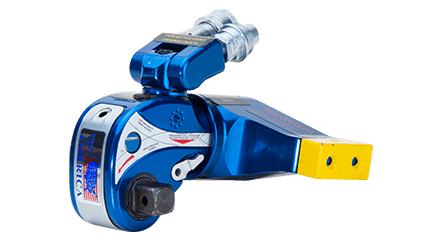
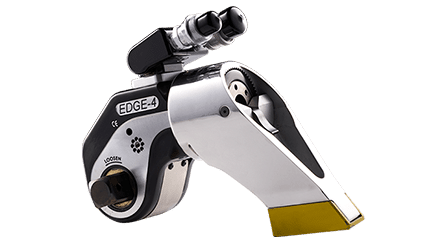
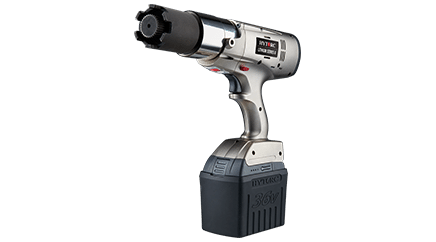
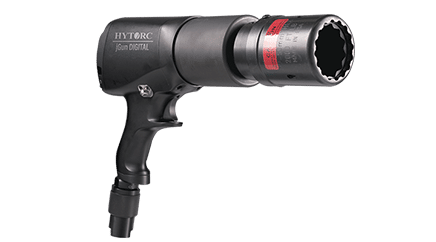
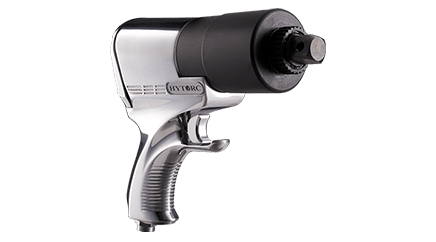
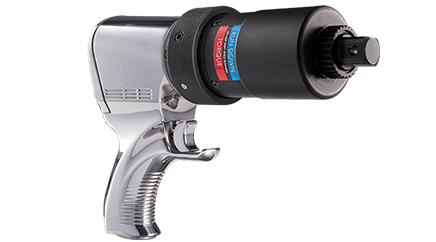
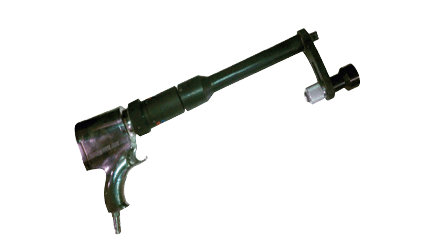
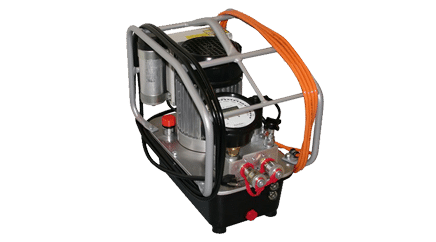
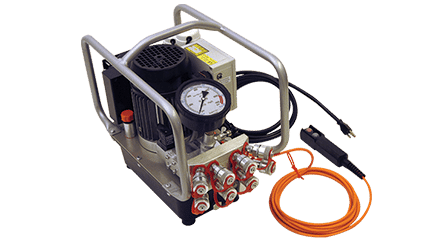
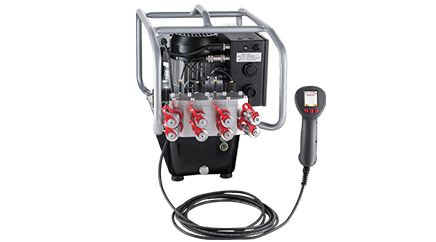
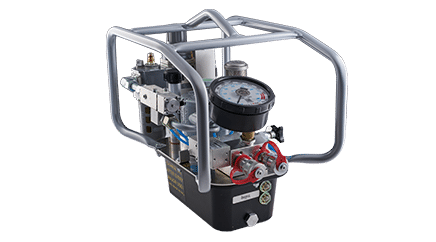
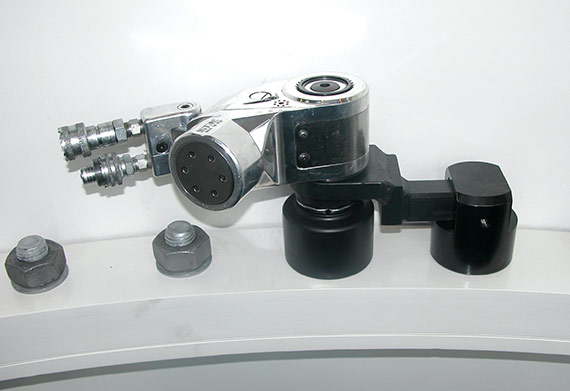
HYTORC has developed a wide range of torque tightening tools equipped to meet the most common cases in accordance with the bolted connections standards in force and their evolutions.
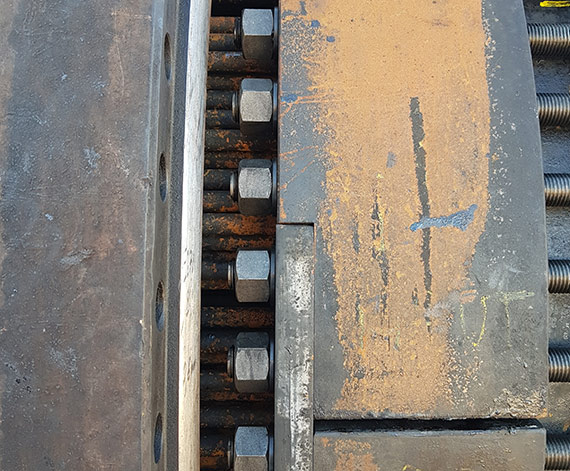
If these tools are sufficient on their own for simple cases such as standardized sealing flanges, the situation is different for special machines and assemblies of metal structures.
Depending on the case, it is necessary to provide tightening accessories to be able to carry out the assembly operations while preserving the safety of the operators and the integrity of the devices in order to be able to deliver a dynamometric torque despite everything.
Delivery upon validation of the order
Other than hydraulic eye wrenches, all other tools require a socket to interface between the tool and the bolt. This bushing is a critical link in the application of the torque and ensures the transmission of a very high torque force and must therefore have a very high resistance. HYTORC supplies impact quality sockets usually used with impact wrenches to ensure better safety for operators. All sockets, whether male or female, guarantee successful work in the best possible conditions.
If the height of the bolt does not allow the use of a socket, HYTORC Offset Links cartridges can be fitted to the tool’s square drive to tighten the bolt to torque with minimum space requirement.
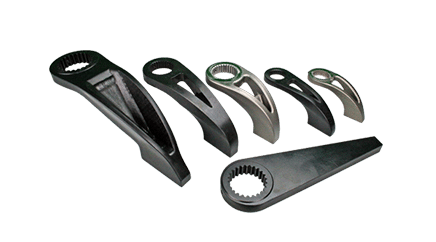
In contrast to the well-known impact wrenches for precise torque application, HYTORC torque tools work without vibration but with support. To do this, the tightening tool, whether it is a hydraulic wrench or a torque wrench, must rest on a fixed and solid point that will allow the development of the precise torque expected. Unfortunately, in some cases it is difficult to reach a reaction point due to distance or resistance. A suitable arm is therefore required and HYTORC has already developed a wide variety of solutions for all its tools thanks to its 50 years of experience.
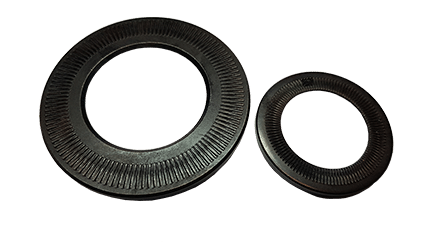
Tightening to torque can cause the bolt to rotate completely. To remedy this common phenomenon, the opposite nut must be retained and HYTORC therefore proposes two different methods. The optimal method is the replacement of the flat washers under the opposite nut by a HYTORC backup washer which directly cancels the problem without any tool or need for a dedicated operator. And the conventional method by providing counter keys that will prevent the rotation either in a purely mechanical way or with hydraulic assistance for more ease.
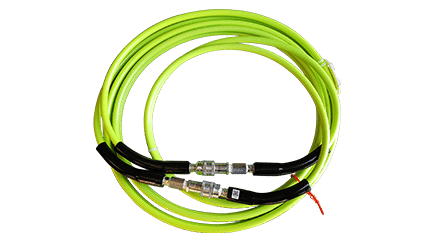
Once the tool is configured to develop the torque necessary to tighten or loosen the bolt, the area of tightening may be far from where the hydraulic pump that will supply the pressure can be positioned. Or when the bolt is high and the pump must remain on the ground or on a more suitable platform below. In this case the hoses cannot be assembled end to end, they cause the inversion of the hydraulic circuit and disturb the normal functioning of the hydraulic wrench, so it is imperative to choose hoses of a length adapted to its operation.
HYTORC twin hoses are also certified with a 4:1 safety factor on burst pressure to avoid accidents and their structure ensures good protection against the risks inherent in the conditions of construction.
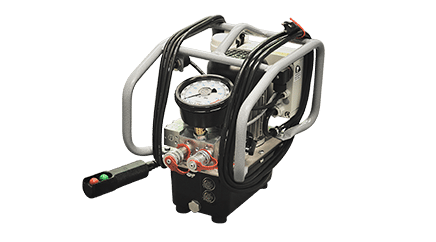
Depending on the regulations in force in the companies with regard to hydraulic tools, it is possible to provide push-pull quick couplings, for example, to meet the required criteria without altering the operation.